|
|
| .... |
|
Editor's update:- January 2014 -
WhipTail - a top 5 SSD company - entered the
Top SSD Companies List
in Q4 2011.
In
the quarter before Cisco's acquisition announcement - in
Q2 2013 - WhipTail
was ranked #9 (down 2 places from where it had been in the prior quarter).
In
the 2 quarters overlapping with Cisco's acquisition announcement and completion
Q3 2013 and
Q4 2013 -
WhipTail was ranked #5. Its highest position ever.
What
happened after that?
- 12
key SSD changes in 2014 - the rackmount form factor continued to be the
most significant focus in the enterprise - with clarifications on pricing
models, new fabric technologies, more acquisitions and even the discovery of
under exploited user segments.
- the Top SSD
Companies in Q3 2014 - the clues had been coming in the preceeding quarters
- but this quarter confirmed that a new form factor in server hosted flash
acceleration was grabbing the attention of the enterprise market in the same
kind of way that PCIe SSDs
had done 5 years earlier.
Who's who in SSD?
- by
Zsolt Kerekes,
editor
January 2012
WhipTail is 1 of more than 100 companies
in the rackmount SSD
market, and also appears in these sub-segments of the SSD market:-
iSCSI SSDs,
FC SAN SSDs and
InfiniBand SSDs.
WhipTail
- which launched its first flash SSD arrays in
February 2009
- made its debut appearance in the
Top SSD Companies List
recently (January 2012) based on search metrics in Q4 2011.
The
company recently changed the way it describes itself to suggest it was the
first company to market enterprise grade flash SSD arrays. That's bunkum of
course - because FC and NAS compatible rackmount flash arrays were being
shipped by several companies in
2007 - the
year before WhipTail was founded - and one of those companies was an early
supplier of technology to WhipTail itself.
I don't want to make a big
thing out of this particular error - because it's typical of the messy
verbiage that many high tech companies get into when they try to formulate a
summary description of themselves while still trying to preserve as many words
as possible from the Holy Writ passed down from the early text drafts of
their founders.
Eventually a kind customer or a clarity seeking
editor has to come along and say to a company - Look I'm interested in what
you do - but you really do need to rewrite this - either because it doesn't make
any sense (I can supply a list of SSD companies with profiles in the nonsense
category) or because it appears to make sense but the exact words convey a
message which undermines your credibility - or maybe the words just say nothing
useful at all.
For example -
STEC has appended the
null content phrase "the SSD company" to its logo and
SSD videos. And whereas
they might wish they were "the only (implied) SSD company" -
as their investors know only too well - many "other" SSD companies
seem to be blissfully unaware that they aren't supposed to exist.
The
problem for SSD
brand marketers is - once you start adding detailed qualifying statements
to company logos and mission statements they can start to read more like a
legal contract - and they lose their punchiness.
back to
WhipTail...
I was prompted to update my understanding of what
WhipTail is doing (in early January 2012) by some probing reader questions
which I couldn't answer adequately - as it had been more than a year since I
had last talked to the company's CTO and 5 months since they had done
anything I regarded as newsworthy.
Sometimes coincidences happen in
my job and the very next day a PR person working for WhipTail contacted me and
said would I like to talk to one of their senior managers? (This was the week
before they went on to announce their 2nd funding round.) And that was also
when I had got to the point in analyzing the search stats for Q4 2011 to
realize they would be making a debut appearance in the top SSD companies list -
which means enough of you are interested in what they do - so I should be too -
and their VCs should
be happy - for a while too,
I didn't disclose that information - and I
said I wasn't interested in a briefing about their press release - but I would
be interested shooting the breeze about the SSD market, discussing what they
were doing now and getting an update on their business. And that turned out to
be a very useful reset for some of my assumptions about WhipTail formed from
earlier contacts with the company (and looking at their web site).
redrawing
the picture of WhipTail
That's how I got to speak recently to
WhipTail's President and CFO - Cameron Pforr .
I
started by asking how they were doing with their real-time dedupe and
compression technology? - because they talked a lot about that when the company
launched and I - for one - thought of them in that context.
He said
they were no longer emphasizing that because it led to latencies which were too
long to be competitive - and instead they were focusing on performance.
WhipTail's
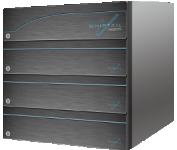
SSD box in 1 paragraph (and 2U)
We discussed technology and rather
than follow the track of our dialog I'll give you my own analysis and
summary of their product line which is this - WhipTail's
XLR8r is a
fast-enough (250K
write IOPS
sustained / 750K IOPS peak) 2U rackmount MLC SSD with
regular RAM cache
- with an open
hardware architecture based on an array of COTS
2.5" SSDs with a
usable capacity density of 6TB per U.
WhipTail doesn't design any of
the flash SSDs in its arrays - instead it qualifies suppliers for consistency
and reliability. Endurance
isn't a worry for fast-enough (as opposed to fastest) MLC SSD arrays -
especially when there's a high ratio of capacity to user bandwidth and also a
RAM cache which helps reduce
write amplification.
Cameron said the logs from their customer systems extrapolate 8 years
operating life.
We had an interesting chat about how to develop SSD
business. Cameron had been at
Fusion-io and
Violin in the early days
of those companies trying to attract customers using (to my way of thinking)
traditional personal sales oriented techniques rather than modern scalable
marketing led methods.
He told me how many people there were in
WhipTail when he joined (about 10) and I was surprised. I said they must all
have been running and typing very fast and preoccupied with development and
sales. It explained to me why the web communications aspect of the company had
been so weak. Beefing up marketing is one of the things that the 2nd round
funding is supposed to do.
Cameron told me about the good reaction
they'd had from customers - reiterating the high percentage of customers who had
already made additional purchases. Their customers are from across the usual
spectrum of industries and applications which benefit from SSD server
acceleration - rather than biased towards 1 or 2 segments.
I've
always said that the market for general purpose "not so fast" SSD
arrays is much bigger than that for the
fastest SSDs -
because most mortals don't need ultimate speed - and slower should be cheaper.
WhipTail's
competitors?
Cameron Pforr told me he sees WhipTail's
particular competitors as being
Violin and
Texas Memory Systems.
Personally,
I'd disagree with that assessment. Those 2 companies occupy a space in user
perceptions about the market because they've sold a lot of SSD systems - and
that's a market position to aspire to - but I'd say that WhipTail's direct
competitors to beat will be the unknown masses of white box and big name
SSD RAID vendors.
Let
me explain my thinking here.
Systems based on
small SSD
architecture modules like those in WhipTail's arrays are currently at a 2 to
1 disadvantage when it comes to capacity density compared to the big
architecture controllers from Violin and TMS - and WhipTail isn't in the same
performance league either - when you look at performance per U.
That's
not a problem when you're looking at small installations - where a customer
might only use one to a handful of SSD racks - but to my way of thinking -
petabyte scale SSD
users who want to stuff all their cabinet space with SSDs are going to
get more picky about SSD metrics per rack unit.
That's where
segmentation comes in.
Some users will prefer the "open"
WhipTail approach (because the customers will feel they are less dependent on
single source hardware) others will prefer the "proprietary" Violin /
TMS approach because it uses less rackspace - while another set of users again
will choose to buy standard servers stuffed with
PCIe SSD cards. As I
discussed in an
earlier article about SSD rack trends - I think all these different
approaches will thrive despite their apparent contradictions.
In
this year of the
enterprise SSD goldrush - companies like WhipTail which have an easy to
understand system that works and high customer re-order rate - can be confident
that if they get their marketing right - they can easily sell all the SSDs they
can make.
Getting above the visibility horizon is the first step in
that process - and they've achieved that. Staying there as we know from recent
SSD history
- is much harder.
For more info about WhipTail take a look at the
links above and
WhipTail
- editor mentions on StorageSearch.com.
I currently talk to more
than 300 makers of SSDs and another 100 or so companies which are
closely enmeshed around the SSD ecosphere - which are all profiled here on
the mouse site.
I learn about new SSD companies every day, including
many in stealth mode. If you're interested in the growing
big picture of
the SSD market canvass - StorageSearch will help you along the way. Many
SSD company CEOs read our site too - and say they value our thought leading SSD
content - even when we say something that's not always comfortable to hear. I
hope you'll find it it useful too. |
| .... |
|
|
In February 2009 -
WhipTail Tech announced details of its
iSCSI compatible 2U
rackmount RAID protected
SSDs. Available with 1.5TB (price approx $60,000) or 3TB capacities the systems
internally use COTS flash SSDs managed by
EasyCo's MFT technology
which significantly improves write IOPS and endurance.
In
April 2009
-
WhipTail named 5
new channel partners who are selling its rackmount flash SSDs. This followed
another recent announcement that WhipTail had appointed John Zamites as its
channel manager.
In
July 2009
- WhipTail Technologies
announced a 6TB version of its 2U SSD appliance. Pricing starts at $46,000
for a 1.5 TB system.
WhipTail's CEO, Ed Rebholz said "One of
Tier 0 storage's
downfalls to date has been the perception within the industry that it's too
expensive. Since WhipTail's introduction earlier this year, we've already made
significant strides in helping our industry peers to gain a new perspective. And
in introducing the 6TB capacity, not only is WhipTail setting the bar for
performance, footprint and affordability, but now we're the SSD capacity leader."
Editor's
comments:- it's certainly the highest density server acceleration SSD I'm
aware of. But you should be aware that the internal flash is MLC (and not
SLC) which is
a bird of a
different feather. The memory type wasn't stated in the original text of
the press release.
A company spokesperson assured me that WhipTail
manages the write cycle to ensure that the MLC disks last a minimum of 7 years
when under load.
Other competing 2U SSDs in this capacity range
include:- the
RamSan-620 a 5TB SLC
flash SSD from Texas
Memory Systems and the Violin
1010 a 4TB SLC flash SSD from
Violin Memory.
In
October 2009
- WhipTail Technologies
became the 1st SSD appliance company to market integrated in-line
deduplication.
WhipTail announced
it will ship its newly renamed Racerunner (6TB) NAS SSDs with
Exar's Hifn
BitWackr
deduplication and compression solution in Q4 2009. Racerunner has demonstrated
deduplication performance in excess of 1Gbps.
In February 2010 -
StorageSearch.com published a new
directory on the subject of - Solid
State Storage Backup (S3B).
In March 2010 -
WhipTail Technologies
announced a Europe wide distribution and support agreement with
Consolidate IT.
In April 2010 -
WhipTail Technologies
published a
white paper which
discusses how SSD acceleration can economically close the scaling performance
gap which comes from virtual desktops and compares the SSD vs HDD array
costs for a 5,000 virtual user system.
Although there's nothing in
this article which introduces new
SSD
acceleration architectural concepts - the 13 page document is a clearly
written modern introduction to anyone interested in learning about how
SAN centric SSDs can
accelerate common applications.
...read the article (pdf)
In
August 2010
- in an effort to improve its prospects in the datacenter
WhipTail Technologies
announced
a new name for its NAS
SSDs - Datacenter XLR8r instead of Racerunner - and also unveiled HA
options which involve dual failover systems. The little lizardy creatures are
still on WhipTail 's site. Serious SSD buyers aren't scared by
animal brands.
In
September 2010
- WhipTail Tech's CTO,
James
Candelaria shared his
SSD Bookmarks
with readers of
StorageSearch.com.
In
August 2011
- Enterprise Strategy Group
published
a test report on WhipTail
Technologies' 2U iSCSI SSD appliance in a simulated 300 desktop VMware /
W7 environment. Applications ran glitch free - even when a flash drive was
removed.
In January 2012 -
WhipTail
announced
it has secured a Series B funding round led by RRE
Ventures, with Ignition Partners
and Spring Mountain Capital
also participating.
In May 2012 -
WhipTail
launched
a new multi-protocol
HA SSD rack
called the INVICTA ($250,000
for a 6TB 6U 250K
IOPS 200 µS
latency model).
In September 2013 -
Cisco
announced its intention
to acquire WhipTail
(a leading rackmount
SSD company) for approximately $415 million in cash and retention-based
incentives. | |
| .. |
 |
| .. |
| 7 SSD
types will satisfy all future enterprise needs |
The enterprise SSD market is complicated
enough already but despite that - only 7 distinct types of SSD classes are all
that are needed to sustainably satisfy all the architecture needs in the pure
solid state storage data center of the future.
That's the message of my
article -
an introduction to
enterprise SSD silos.
"SSDs aren't islands - their
data always comes from and goes on to other SSDs. Enterprise SSDs which have
been designed without any reference to how they will be segmented marketwise
and interact technically with other types of SSDs - in the mind's eye of the
customer architecture - will eventually fail in the market..."
If
you're an enterprise SSD user - you can use these classifications to judge where
all the current SSDs in your shortlist today fit within the scope of your
(maybe as yet unclear) future SSD architecture.
In today's SSD market
there are many SSD solutions which appear to solve today's problems
economically - but which are dead-end solutions from an SSD architecture point
of view.
If you install such systems now - then you will create future
problems when you expand your SSD infrastructure because those types of products
and their suppliers may not be around for too long.
If you're an SSD
vendor - then having a clearer picture of the future enterprise customer mix
will help you kill bad product ideas before they sink the business.
Better still - knowing where your good products fit in the model will help
you market them more efficiently... |
 |
and may help you recognize
which SSD vendors could be natural partners - because you don't compete for
the same SSD cave space. ...read the article | | | |
| .. |
|

| |
"Were going to really
be the leaders in the market for converged infrastructure and how this stuff
really behaves together when its designed holistically...
"...because
the UCS product line is a fairly young product line and the WhipTail product
line is a fairly young product line, we have the ability to leverage all the
strengths of everything in Ciscos product spacenetworking and computing and now
solid state persistenceand really bring together all these pieces into a high
performance distributed infrastructure..." |
| Dan
Crain, CEO of WhipTail
- from the article -
WhipTail
has just become part of Cisco (interview transcript) - October 29, 2013 | | |
| . |
| Cisco to
acquire WhipTail |
Editor:- September 10, 2013 -
Cisco today
announced its intent to
acquire privately owned WhipTail for
approximately $415 million in cash and retention-based incentives.
"We
are focused on providing a converged infrastructure including compute, network
and high performance solid state that will help address our customers'
requirements for next-generation computing environments," said Paul Perez, VP
and GM, Cisco Computing Systems Product Group.
Editor's comments:-
as we learned in June - WhipTail has designed an elegant and scalable software
and hardware architecture to
solve the ever
changing SSD rackmount riddle game - which can compete in cost sensitive
iSCSI environments or
hold its head up among the
fastest SSD
installations while also offering resilient
fault tolerance
and upgradability.
WhipTail entered the
Top 20 SSD companies list
in Q4 2011 and has
been in the Top 10 part of these lists in every quarter since
Q2 2012.
See
also:- the
new thinking in rackmount SSDs | | |
| . |
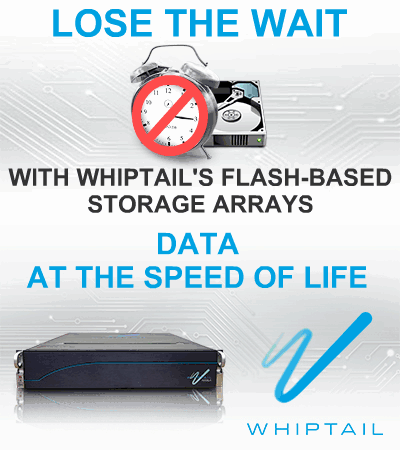 |
Above you can see an enterprise
SSD ad from SSD
market history which ran here on StorageSearch.com in WhipTail's final year
as an independent company. The well designed yet simple ad message left
readers in absolutely no doubt what they could expect. It got a great response
from readers - as you'd expect. |
| . |
| "The Data Storage
industry born in the 1950s has plateaued. Today it is dominated by a handful of
players who are struggling with several issues including:- boredom that has led
to more innovative marketing than technical innovation and an interdependent
ecosystem that is highly resistant to change."
|
| Dan Crain,
CEO of WhipTail
(August 27, 2013) in his article -
Data
Storage in Flux – Time for a Radical Change? | | |
| . |
| WhipTail opens new channel
for defense sales |
Editor:- July 24, 2013 - ViON announced it will
now serve as an authorized provider of maintenance and support services for the
entire WhipTail
product line.
"This partnership took off primarily due to the
great success at WhipTail with the
defense and
intelligence communities and ViON's clearance and track record of successfully
providing first level support for other vendors." said Dan Crain,
CEO of WhipTail. | | |
| .... |
|
|
| .... |
|
| .... |
| WhipTail outgrows in-house
manufacturing |
Editor:- February 21, 2013 - WhipTail today
announced
that it has outsourced manufacturing its full range of
rackmount SSDs to
NEI.
"When we were a small
company, we could handle our own manufacturing, but that's not the case anymore"
said Dan Crain,
CEO WhipTail. | | |
| . |
| SanDisk invests in WhipTail |
| Editor:- December 13, 2012 - WhipTail today
announced
it has secured $31 million series C funding from a group of investors which
include SanDisk, an
unnamed "Silicon Valley industry titan" and some named private
equity companies and VCs.
| | |
| . |
| "customers want more"
- says Whiptail's CEO |
Editor:- November 29, 2012 - Whiptail today
announced
a new up-scale option for its
Invicta
(rackmount SSDs)
which will be available in the next quarter.
The so-called INFINITY
option elevates the ceiling from 6 to 30 nodes and up to 360TB flash.
Dan Crain,
Whiptail's CEO said - One clear theme that we've heard from our customers is -
we want more. What they are discovering is once they start moving their data and
applications to Whiptail, their productivity increases so much that they want to
bring all of their business critical apps to flash. Its like eating potato
chips, you cant stop with just one. | | |
| . |
| Datacenter SSD capacity may
grow 8x in the next 2 years - says IT Brand Pulse |
Editor:- August 31, 2012 - Frank Berry,
CEO at IT Brand
Pulse gave a presentation at the Flash Memory Summit -
SSD
Buyer Behavior (pdf) - which lists perceptions of who are the
SSD brand
leaders based on datacenter surveys.
Among the many findings
in this presentation is that datacenter SSD users expect their SSD capacity
will grow nearly 8x in the next 2 years.
Among the many brand
classifications - Whiptail
was ranked #2 in unified SAN/NAS rackmount flash SSDs, after the #1 ranked
Nimbus.
A more
detailed report -
Flash Unified
SSD System Brand Leaders - is available ($3,950, 19 pages).
Editor's
comments:- in the Top
SSD Companies List (by StorageSearch.com reader search volume) Whiptail
ranks above Nimbus, instead of below it - as suggested by the IT Brand Pulse
survey mentioned above.
Differences in relative ranking are probably
due to different sample sizes and methods. Both companies are significant if
you're looking for this type of product. | | |
| . |
 |
| . |
|
|
| . |
| don't all PCIe SSDs
look pretty much the same? |
When you look at the
photos and headline specs for high speed PCIe SSDs - it's easy to come away with
the impression that they all look the same and have about the same performance.
After
all - how different can they be?
But don't let the experience of the
2.5" SSD market -
in which clusters of consumer SSD vendors use the
same or similar
controllers and hover
close together inpopular
(consumer) performance rankings - give you the wrong idea about
PCIe SSDs.
In
this market the performance limits and capabilities of the SSD aren't set by an
old hard disk interface
and package limitations.
In the PCIe market the products you get are
limited only by the imagination of the designers - tempered by the guesses of
marketers who are trying to predict the optimum (most salable) features for an
ideal SSD. |
|
| | |
| . |
|
| . |
| |